A child crouches beside the edge of a walking path, completely taken by a line of ants carrying crumbs through the dry grass. The adult has somewhere to be. Not somewhere urgent, exactly, but there is a schedule, a bag slipping off one shoulder, and a growing temptation to say, “Come on, let’s go.”
Then the child asks a question that is bigger than the moment: Why do they all help each other? Before the adult can answer, the child reaches toward the ants, loses balance, gets frustrated, and wants to quit the walk altogether. Now there are choices. Hurry them along. Correct the whining. Take over. Distract. Or slow down just enough to see that this is not only a delay.
It is a small page in the child’s developing story of home. Not because every ant on every sidewalk deserves a full science lesson, and not because parents should be endlessly available. But because over time, these ordinary moments teach a child what curiosity feels like, what frustration is allowed to look like, how help is offered, how limits are held, and whether relationship stays steady when things get inconvenient.
Introduction
Here is a question worth carrying with you:
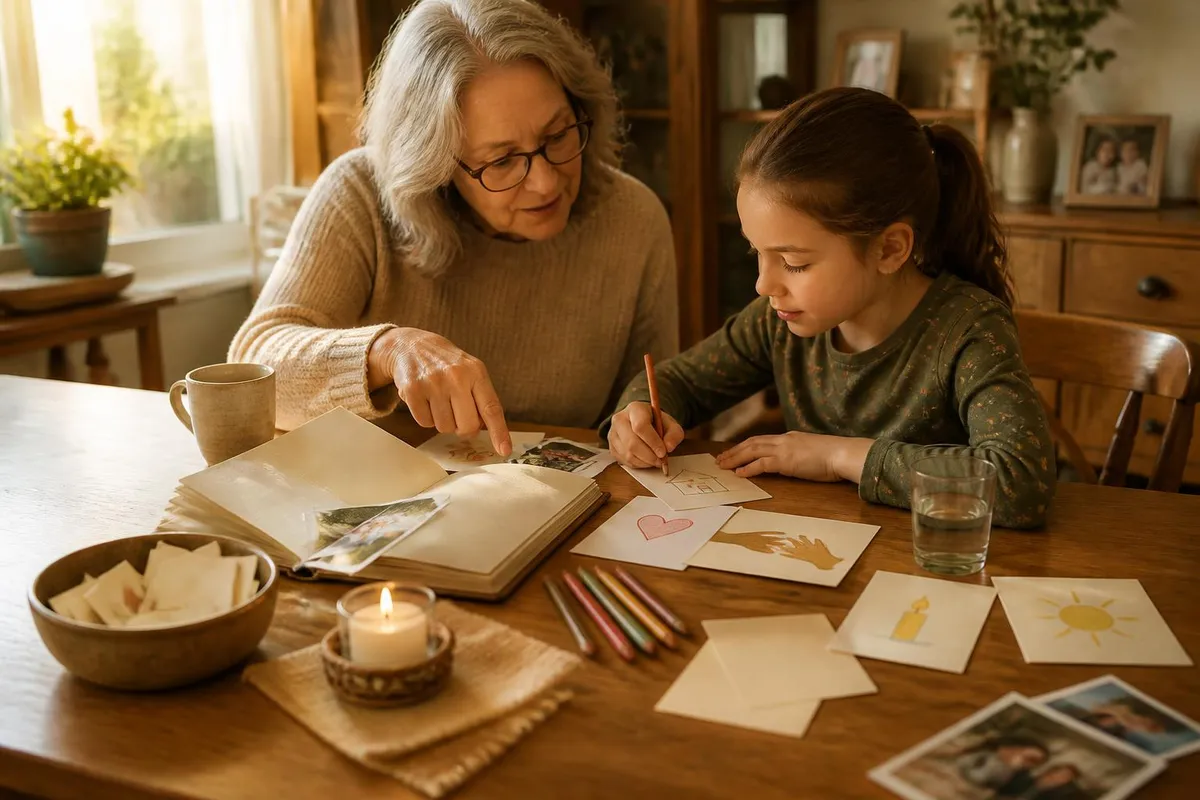
If your child wrote a book about their childhood twenty years from now, what would you hope it said about you and the feeling of your home?
Not the square footage. Not the perfect shelves. Not whether every day was peaceful or every activity was enriching.
What would you hope they remembered?
Maybe you would hope they wrote, “Home felt safe.”
Or, “My parents listened.”
Or, “We were expected to help.”
Or, “When things went wrong, we came back together.”
Or, “There was laughter.”
Or, “We learned to pray, forgive, try again, and notice people who needed us.”
That is the heart of home environment child development. A child’s home environment is not only the physical place where they sleep, eat, and keep their things. It is the emotional climate they breathe every day. It is routines, language, modeling, expectations, shared attention, repair, spiritual grounding, play, responsibility, and the repeated messages they receive about who they are and how life works.
And here is the hopeful part: the story of your home is not written by one bad afternoon.
It is written in patterns. It is shaped by what you consistently return to.
What Your Child May Remember About Home
When we think about creating a “good home environment,” it is easy to picture the visible things first: clean rooms, organized supplies, healthy meals, educational toys, a peaceful living room, a full calendar of opportunities.
Those things can be helpful. Order can lower stress. Beauty can bless a family. Predictable routines can create security.
But children are also absorbing something deeper.
They are learning:
- Is it safe to ask questions here?
- Are mistakes met with humiliation or guidance?
- Do adults apologize when they are wrong?
- Can I be upset and still be loved?
- Am I needed in this family, or merely managed?
- Do we notice God, goodness, beauty, and other people?
- Do we keep trying when something is hard?
- Do limits mean rejection, or do they mean I am being guided?
A child may not remember every conversation. They may not remember the exact words you used when they were five or seven or twelve. But they will likely remember the emotional tone of repeated experiences.
Home can feel warm and still have rules.
Home can be joyful and still have chores.
Home can be forgiving and still require responsibility.
Home can be safe and still expect children to make amends, use respectful words, contribute to the family, follow through, and try again when something is difficult.
That combination matters. Children do not need a conflict-free home to thrive. They need a dependable one. They need parents who are not trying to control every outcome, but who are willing to be stable guides. Lighthouses. Present, clear, connected, and steady enough to help them find their way back when the waves get big.
The Moment Is Small, But the Message Repeats
Let’s go back to the child on the walking path.
The adult still has to keep the group moving. There may be another child waiting. There may be heat, hunger, a time limit, or safety concerns. A warm response does not mean the walk now belongs entirely to the child’s curiosity.
But the adult has options.
They can pause for one genuine question: “You noticed how they help each other.”
They can hold the boundary: “We can watch for one more minute, and then we need to keep walking.”
They can invite contribution: “Would you like to carry the water bottle to the next bench?”
They can support perseverance without rescuing: “You’re frustrated because you stumbled. Take a breath. You can stand up and try again.”
They can reconnect after strain: “That was hard. I’m glad we kept walking together.”
Nothing dramatic happened. No perfect speech was given. No one became an ideal parent in sixty seconds.
But a pattern was practiced.
Curiosity was welcomed without letting it run the whole day.
A limit was held without shaming the child.
A child was invited to help, not just hurry.
Frustration was acknowledged, but it did not excuse quitting or harsh behavior.
Connection returned after the difficult part.
This is how values become lived experiences.
We can say we value curiosity, but children experience curiosity when we make room for their questions.
We can say we value responsibility, but children experience responsibility when they are trusted with meaningful contributions.
We can say we value perseverance, but children experience perseverance when we encourage effort and allow them to struggle appropriately instead of taking over every hard thing.
We can say we value generosity and faith, but children experience those values when they see us notice needs, offer thanks, pray briefly, speak with compassion, and live what we say we believe in the middle of ordinary life.
The goal is not to turn every walk into a lesson. The goal is to recognize that ordinary life is already teaching.
Warmth and Structure Belong Together
Many parents worry that if they slow down, validate feelings, or listen more closely, they will become permissive.
But connection is not permissiveness.
Validation is not agreement.
Understanding what is happening inside your child does not mean excusing what they do with it.
A child can be disappointed and still be expected to speak respectfully.
A child can be tired and still be responsible for helping clean up.
A child can be angry and still need to repair harm.
A child can struggle and still be guided toward the next right step.
The Raising Royalty perspective holds warmth and accountability together.
A parent might acknowledge the feeling, state the limit, invite responsibility, and return to connection.
Not as a script you must say perfectly, but as a rhythm:
- See the child. “This is hard for you.”
- Hold the boundary. “We are still going to be safe and respectful.”
- Guide the next action. “You can try again, help fix it, or take a breath and come back.”
- Repair and reconnect. “We had a hard moment, and we are still okay.”
That rhythm teaches a child something powerful: love does not disappear when correction is needed.
It also teaches something equally important: being loved does not remove responsibility.
Why the Emotional Climate Supports Development
Research does not need to replace parental wisdom, but it can affirm what many parents sense intuitively: children grow through relationships and repeated experiences.
A review from the OECD on home environments and children’s early learning and development describes the home environment as more than physical resources. It includes interactions, routines, engagement, and the broader setting in which children grow.
That matters because a child’s development is not only shaped by what is available in the home. It is also shaped by what is repeatedly practiced there.
Warm, responsive conversations help children build language because they are hearing words in relationship, not just receiving information. A Pediatrics meta-analysis on parenting behavior and child language connects responsive parenting and cognitive stimulation with stronger language development, with warmth strengthening the value of those interactions.
In plain parent language: the little conversations count.
The question about the ants counts.
The explanation while cooking counts.
The naming of feelings counts.
The shared attention when your child says, “Look!” counts.
And when children are in safe, inviting, responsive conditions, they are often better able to explore, ask questions, persist, and practice self-regulation. Research on early childhood curiosity and ecological contexts connects curiosity and self-regulation with factors such as home stimulation, parenting quality, and neighborhood safety.
This does not mean parents control every developmental outcome. You do not. Children have different temperaments, needs, sensitivities, and stories. Families also face real pressures that affect what is possible in a given season.
But it does mean your repeated interactions matter.
Not because you must be perfect.
Because patterns are powerful.
When the Story You Want and the Pattern You Practice Do Not Match
This is where many parents feel a little ache.
Because you know what you want your home to feel like. You want it to be safe, warm, purposeful, respectful, playful, spiritually grounded, and full of love.
But then real life happens.
You are tired.
The house is loud.
The same behavior keeps repeating.
You answer questions with irritation.
You take over instead of teaching.
You correct without reconnecting.
You intend to invite your child to contribute, but it feels faster to do it yourself.
You want more gratitude, more prayer, more laughter, more patience, but survival mode keeps taking over.
If that is you, please hear this clearly: recognizing a gap is not the same as condemning yourself.
It is an invitation.
You are not looking for evidence that you have failed your child. You are looking for one place where the family story can become more aligned with the family you are trying to become.
The story is still being written.
And repair counts as part of the story.
Sometimes the most powerful memory a child carries is not, “My parent never got it wrong.” It is, “When my parent got it wrong, they came back. They apologized. They tried again. They taught me how to do the same.”
That is a home environment, too.
A Question Worth Asking Yourself
Take a quiet moment, maybe after the children are asleep or while you are sitting in the car before walking into the next thing, and ask yourself three questions.
1. What do I hope my child remembers one year from now?
Not twenty years from now yet. Just one year.
Do you hope they remember that home felt calmer? That they were invited to help? That questions were welcomed? That the family prayed together more consistently? That conflict did not always end in distance? That effort was noticed? That play had a place?
Choose words that feel like the culture you want to strengthen.
Maybe:
- Safe
- Warm
- Responsible
- Curious
- Generous
- Playful
- Respectful
- Faith-filled
- Connected
- Resilient
2. What repeated pattern is louder than I want it to be?
This is not about blaming yourself. It is about noticing.
Maybe hurry is louder than curiosity.
Maybe correction is louder than connection.
Maybe doing everything yourself is louder than contribution.
Maybe lectures are louder than repair.
Maybe screens are louder than shared attention.
Maybe irritability is louder than gratitude.
Maybe avoidance is louder than follow-through.
Be honest, but be gentle.
You are naming a pattern so you can guide it, not so you can shame yourself.
3. What one small practice can I repeat?
This is where many parents try to redesign the entire family. Please don’t.
Choose one practice small enough that you can repeat it on an ordinary day.
Not a full family transformation.
Not a new personality.
Not a perfect routine.
One repeatable practice.
Here are a few examples:
- Pause for one genuine question each day before moving on.
- Invite your child to make one meaningful contribution to the family.
- Name effort when your child is struggling instead of rushing to rescue.
- Reconnect after conflict with a brief apology, hug, prayer, or calm conversation.
- Share one gratitude at dinner, in the car, or before bed.
- Protect ten minutes of play where you are not correcting, teaching, or multitasking.
- Let your child help in a real way, even if it takes longer.
- Practice one sentence of encouragement when someone wants to quit.
- Create a brief spiritual rhythm, such as a morning blessing, prayer, Scripture, or moment of thanks.
The best practice is not the most impressive one. It is the one you will actually return to.
Your Small Step Today
Today, choose one moment where you usually rush, correct, dismiss, or take over.
Then practice a small pause.
That is it.
One small pause.
When your child asks a question, pause long enough to answer with warmth.
When your child struggles, pause long enough to name the effort before helping.
When your child resists responsibility, pause long enough to connect before holding the boundary.
When conflict happens, pause long enough to come back and repair.
You might say fewer words than usual. You might still feel impatient. The moment may not become beautiful.
That is okay.
The practice is not perfection. The practice is returning.
Keep Growing
If your child wrote a book about their childhood twenty years from now, the story would not be made of one perfect Saturday, one organized playroom, or one beautifully executed family routine.
It would be made of repeated moments.
How questions were received.
How mistakes were handled.
How laughter was protected.
How responsibilities were shared.
How limits were held.
How apologies were offered.
How faith and gratitude were practiced.
How love remained present, even when correction was needed.
Children do not need perfect parents.
They need repeated experiences of safety, warmth, guidance, accountability, forgiveness, contribution, and coming back together.
So begin small.
Choose one practice that brings today a little closer to the story you hope your child will someday tell. Then repeat it. Not flawlessly. Faithfully.