Your child is standing near the counter while you are trying to get dinner finished, the cutting board is full, the pan is hot, and someone still needs to set the table. Then, out of nowhere, they ask, “Why does the cheese melt but the carrot doesn’t?”
You have options in that moment. You can say, “Because it just does.” You can launch into a full science lesson while the food starts to burn. You can turn it into a quiz: “Well, what do you think cheese is made of? Do you remember what we talked about last week?” Or you can pause just long enough to meet the question with interest: “That is a good thing to notice. What do you think is changing when it gets hot?”
That small pause matters. Not because every question needs a perfect answer, but because your response teaches your child something about whether their thoughts are welcome with you. Are you trying to understand their thinking, or are you simply trying to get through the moment?
Introduction
Curiosity in children is not just about asking a lot of questions. It is not a sign that you need to buy more kits, plan more outings, or become an expert in every subject your child mentions.
Curiosity is a way children learn to meet the world.
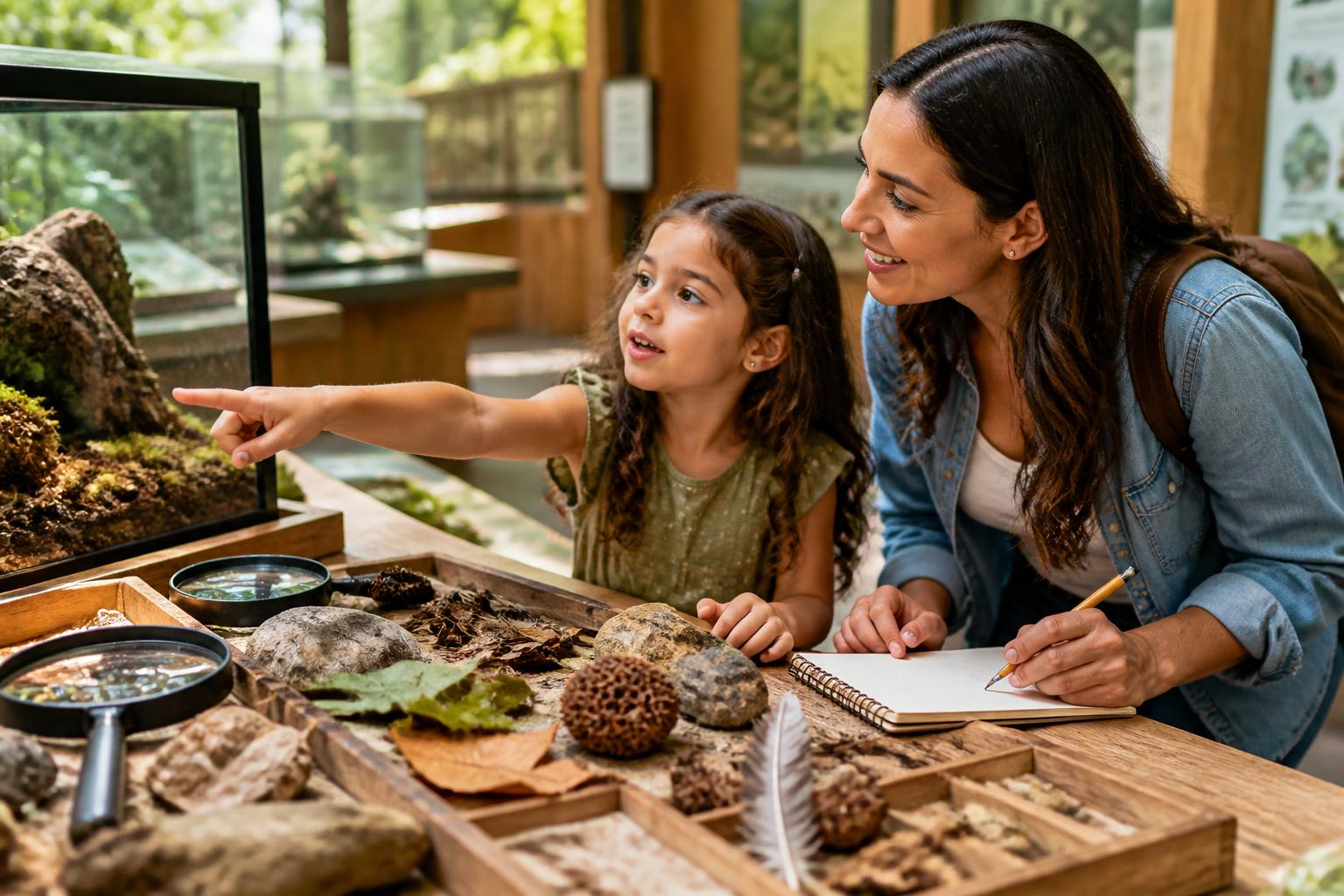
They notice. They wonder. They test ideas. They imagine. They ask. They build. They collect. They revise what they thought was true. Sometimes curiosity sounds like a question at the dinner table. Sometimes it looks like a quiet child turning a rock over in their hand. Sometimes it shows up as drawing the same character again and again, taking apart a broken toy, making up songs, sorting objects, watching documentaries, or asking why people behave the way they do.
As parents, our role is not to have every answer. Our role is to become steady guides who help our children feel safe enough to wonder, supported enough to try, and grounded enough to explore within healthy boundaries.
The way we respond to questions can either open communication or quietly close it.
Curiosity Is More Than a School Skill
It is easy to think of curiosity as something that helps children do well in school, and yes, questions matter for learning. When children ask “why,” “how,” and “what if,” they are practicing attention, reasoning, meaning-making, and flexible thinking.
They are not merely delaying bedtime or distracting you from dinner.
Research on early scientific thinking suggests that curiosity-driven exploration can help children pay attention to relevant information, investigate ideas, and develop early reasoning skills. In parent language, this means a child’s questions are often part of how they are trying to understand the world, not just noise in the background of family life.
But curiosity matters beyond academics.
A curious child is learning how to stay engaged with life. They are learning that not knowing something is not failure. They are learning that ideas can be explored, mistakes can be revised, and learning can continue.
That is one of the deeper gifts of nurturing curiosity: it helps children develop a relationship with learning that is not based only on performance, grades, or getting the right answer.
It also helps the family relationship.
When a child feels listened to, they are more likely to share their observations, uncertainties, concerns, and interests. If they know their small questions are met with respect, they are more likely to bring you the bigger questions later.
Not every time. Not perfectly. Children are still children.
But over time, the message becomes clear: “My thoughts matter here. My parent wants to understand me.”
That message is part of being seen, safe, supported, connected, and inspired.
The Difference Between Curiosity and Interrogation
Here is where many loving parents get stuck.
We want to encourage our children, but our questions sometimes come out sounding like pressure.
A curiosity-based question sounds like an invitation.
An interrogation sounds like a demand.
A lecture gives information but may leave little room for the child’s thinking.
Immediate fixing solves the problem quickly but can accidentally skip the child’s opportunity to wonder, reason, or express what is underneath.
Here is the difference in everyday language:
- Curiosity-based question: “What made you wonder about that?”
- Interrogation: “Why are you asking that? Who told you that? What exactly do you mean?”
- Lecture: “Actually, the reason that happens is because…” followed by five minutes of information the child may not have asked for.
- Immediate fixing: “Here, I’ll just show you,” before the child has had a chance to try.
Curiosity-based questions are open, patient, and aimed at understanding the child’s thinking. They do not demand a correct answer. They do not force disclosure. They do not turn every moment into a lesson.
And importantly, they do not remove the parent’s responsibility to guide.
You can be curious and still say, “No, we are not pouring water into the toaster to see what happens.”
You can listen and still hold a boundary.
You can validate the question and still require respect, safety, routines, and responsibility.
Connection is not permissiveness. Curiosity does not mean chaos. It means we pause long enough to understand before we manage, correct, or explain.
A Simple Response Pattern That Opens Communication
When your child asks a question, especially at an inconvenient time, you do not need a speech. You need a rhythm.
Try this:
- Pause and listen. Even two seconds can change the tone.
- Reflect or validate the question. “That is interesting.” “You noticed something important.” “I can see why you are wondering about that.”
- Ask one open follow-up. “What do you think is happening?” “What made you wonder that?” “Where have you seen that before?”
- Explore together or make a plan to return to it. “Let’s look after dinner.” “Let’s test that safely tomorrow.” “Let’s find a book about it at the library.”
- Set a boundary when needed. “We can explore that idea, but we are not using sharp tools without an adult.” “You can ask questions, but you may not speak disrespectfully.” “We will come back to this after homework is finished.”
This pattern protects both connection and leadership.
You are not surrendering your role. You are not making your child the center of every decision. You are showing them that their mind matters while still remaining the calm lighthouse who keeps the family safe and steady.
What This Looks Like in Real Life
Let’s go back to the kitchen.
Your child asks, “Why does the cheese melt but the carrot doesn’t?”
A dismissive response might be:
“Because that’s what happens. Go sit down.”
An interrogating response might be:
“Why are you asking that? Did someone tell you carrots melt? Were you paying attention when we cooked last time?”
A lecturing response might be:
“Well, cheese has fat and protein, and when heat is applied…” Then the child’s eyes glaze over while you are still explaining.
An immediate fixing response might be:
“Here, I’ll Google it,” and the conversation becomes about the answer only.
A curiosity-based response could be:
“You noticed that they change differently. What do you think heat is doing to the cheese?”
If the child says, “Maybe it turns it into liquid,” you might say, “That makes sense. The cheese gets soft and runny. The carrot changes too, but in a different way. Do you want to compare them after dinner?”
If you know the answer, you can offer a simple explanation without taking over:
“Cheese has parts that soften and separate when heated. Carrots have a different structure, so they soften but do not melt like cheese. Let’s watch what happens while they cook.”
If you do not know the answer, you can model lifelong learning:
“I do not know exactly why. Let’s find out together.”
If you want the child to think first:
“What is your best guess before we look it up?”
If you cannot explore immediately because you are handling something hot:
“That is an interesting question, and I want to hear more. I need to finish this safely, so let us write it down and look together after dinner.”
That sentence teaches something powerful: “Your question matters, and safety matters too.”
Both are true.
How to Foster Curiosity at Home Without Making It Complicated
Fostering curiosity at home does not require a house full of educational toys or a calendar packed with enrichment activities.
Supportive environments and responsive parenting can make exploration easier, but every family has different resources, schedules, and limits. Research examining ecological contexts of early childhood curiosity has found associations between curiosity and factors such as home quality, parenting behaviors, neighborhood safety, and socioeconomic conditions. That matters because we should never pretend every family has the same access or capacity. At the same time, nurturing curiosity does not have to depend on expensive outings or perfect circumstances.
Here are practical ways to make room for curiosity in ordinary family life.
1. Protect the Question
Sometimes the most powerful thing you can do is not answer immediately. It is to save the question.
Keep a small notebook, a notes app, or a family “wonder list.” When your child asks something at the wrong time, say:
- “Let’s put that on our wonder list.”
- “I do not want to rush that question.”
- “Ask me again on our walk so we can think about it together.”
- “That would be a good library question.”
This teaches your child that postponement is not rejection.
2. Make Books and Libraries Feel Like Tools, Not Tests
Books do not have to become assignments. Libraries do not have to be formal lessons.
You might say, “You have been asking a lot about storms. Let’s see if we can find a book with pictures of clouds.”
Or, “You keep drawing animals. Do you want to look for a book about how different animals move?”
The goal is not to turn every interest into a unit study. The goal is to show your child that when something sparks their attention, there are places to go, people to ask, and resources to explore.
3. Follow Real-World Sparks
Curiosity grows through contact with the real world.
A nature walk can become a conversation about leaves, birds, mud, weather, or shadows. A museum visit can invite questions about art, machines, history, or culture. Music can lead to rhythm, emotion, memory, language, or movement. Cooking can lead to measurement, texture, smell, heat, family traditions, and patience.
Documentaries, hobbies, collecting, building, drawing, gardening, puzzles, simple experiments, and even everyday errands can all become openings.
Not because you force them to be educational.
Because you are paying attention to what your child is already noticing.
4. Offer Simple Materials and Let Children Try
Children often remain engaged when an experience is interesting and they can sense themselves learning, solving, or discovering something. A 2023 study on children’s exploration of new toys suggests that novelty can begin exploration, while a child’s sense of learning progress may help sustain engagement.
In a home, that can look simple:
- Blocks, boxes, tape, and paper for building
- Measuring cups and water for pouring
- Leaves, rocks, or shells for sorting
- Crayons, clay, or recycled materials for creating
- Magnets, flashlights, or safe kitchen items for exploring
You do not need to direct every move. In fact, sometimes the best support is to stay nearby, observe, and ask one gentle question when invited.
“What are you trying to make?”
“What changed when you added that?”
“What do you want to try next?”
Then let them work.
Notice the Patterns Without Locking Your Child Into a Label
Curiosity gives us clues about a child’s emerging interests, strengths, and potential.
But clues are not cages.
If your child loves building towers, that does not mean you need to announce they will be an engineer. If they love animals, you do not need to decide they are destined to be a veterinarian. If they sing all day, draw maps, collect rocks, ask about money, create stories, or study insects, you can honor the spark without turning it into a fixed identity.
Instead, watch for patterns.
What does your child return to again and again?
- Questions about how things work
- Building, taking apart, or designing
- Pretend play and storytelling
- Music, rhythm, and movement
- Animals, plants, weather, or nature
- Drawing, color, shape, or visual details
- Collecting, sorting, organizing, or comparing
- People’s feelings, choices, and relationships
- Physical challenges, climbing, dancing, or sports
These patterns can help you support your child with more intention.
You might say, “I notice you keep asking about space. Would you like to look for a book or video about planets?”
Or, “You seem to enjoy figuring out how things fit together. Do you want to help assemble this shelf with me?”
You are not assigning a future. You are following a spark.
That distinction matters.
Children need room to grow, change, experiment, and even lose interest. Curiosity is not a contract. It is an invitation.
Boundaries Help Curiosity Feel Safe
A curious child still needs limits.
Exploration is not permission to be unsafe, disrespectful, destructive, or exempt from family responsibilities.
You can preserve the question while saying no to the behavior:
- “You want to know what happens if glass drops on the floor. We are not testing that because it is unsafe.”
- “You may ask why your brother is upset, but you may not laugh at him.”
- “We can experiment with water outside, not on the living room rug.”
- “You can finish building after you put your dishes away.”
- “I hear that you want to keep reading about dinosaurs. It is still time to sleep. We can mark the page for tomorrow.”
Boundaries do not crush curiosity when they are clear, respectful, and consistent. They give curiosity a safe container.
Your child learns, “I can explore, and my parent will help me understand what is wise, safe, respectful, and responsible.”
That is part of raising children who are not only bright, but grounded.
What the Research Reminds Us
Research can support what many parents sense intuitively: children’s questions and explorations are meaningful learning behaviors. Studies on curiosity and early scientific thinking point to the importance of children investigating ideas, noticing evidence, and using questions to make sense of their world.
At the same time, curiosity is not simply an inborn trait that some children have and others do not. Home environments, safety, resources, and responsive caregiving can all influence how freely a child explores.
That is why we approach curiosity with compassion.
Some families have abundant access to museums, safe outdoor spaces, and flexible time. Others are working with tight schedules, limited transportation, small spaces, or daily stress. Raising a curious child is not about comparing resources.
It is about becoming more intentional with the moments you do have.
A question at dinner. A rock in a pocket. A song repeated in the car. A book chosen again. A tool your child keeps touching. A topic they keep circling back to.
These are invitations.
A Question Worth Asking Yourself
When my child asks a question I cannot answer or do not have time for, do they usually experience me as available, dismissive, or hurried?
This is not a question for shame.
Every parent has hurried moments. Every parent has answered too sharply, missed a cue, or said, “Not now,” in a tone they wish they could redo.
The goal is not perfect availability.
The goal is repair and pattern.
If you dismiss a question, you can come back later and say, “You asked me something earlier and I rushed past it. I want to hear it now.”
That teaches your child something too.
Your Small Step Today
Choose one recurring interest your child has shown recently.
Not the one you wish they had. The one that is actually there.
Maybe it is bugs, drawing, cooking, music, building, rocks, jokes, animals, maps, movement, stories, machines, or the moon.
Sometime this week, spend ten undistracted minutes following that interest with them. Ask one open question:
“What do you like about this?”
“What are you noticing?”
“What do you want to try next?”
“What made you curious about that?”
Then listen.
Do not rush to teach. Do not turn it into a performance. Do not make it bigger than it needs to be.
Ten minutes of genuine attention can become a doorway.
Keep Growing
You do not have to become an encyclopedia to raise a curious child.
You do not have to answer every question immediately, plan elaborate activities, or keep your child constantly entertained. You can be tired and still intentional. You can be busy and still protect a question. You can say, “I do not know,” and still remain the guide.
Curiosity in children grows when they feel safe enough to wonder, respected enough to speak, supported enough to try, and guided enough to explore with wisdom.
Start there.
Pause. Listen. Ask one honest question. Follow one small spark.
Over time, those moments do more than build knowledge. They build connection.